
< Blog/Materials
Materials
AUG 11, 2026 · UPDATED OCT 31, 2026 · 5 MIN READ · Thailand Kitchens
Veneer vs Solid Timber for Kitchen Fronts
Solid timber sounds better and often performs worse. Why veneer is usually the right answer in a tropical kitchen.

How each one moves
Solid timber expands and contracts across the grain with every change in humidity. A wide solid door in a Thai kitchen will cup or split eventually unless it is framed and engineered for movement. Veneer over a stable substrate barely moves at all.
What veneer actually is
Veneer is real timber, sliced thin and bonded to a stable core. It is not an imitation. A good veneer door gives you the exact grain and species you chose, on a panel that stays flat for decades.

Sequencing and grain matching
Veneer allows something solid timber cannot: consecutive leaves from the same log, book-matched and run continuously across a whole elevation. On a long kitchen that continuity is the difference between joinery and furniture.
Where solid timber still wins
Edges, handles, shelf fronts and anything that takes impact. We frequently combine the two, using veneered panels with solid lippings, so you get the stability of one and the repairability of the other.

Veneer is real timber
It is the same species and grain on a core that will not cup or split in Thai humidity.
“Solid timber is honest. Veneer is stable. In this climate, stable wins.”
— Thailand Kitchens workshop


Request Your Free Kitchen Consultation
No commitment. No hidden fees. Just expert advice and a clear starting point for your project.
- A design consultant reviews your space and goals
- Honest guidance on materials, layout, and budget
- Free consultation — no obligation to proceed
Continue Reading
Related Journal Entries
View all Journal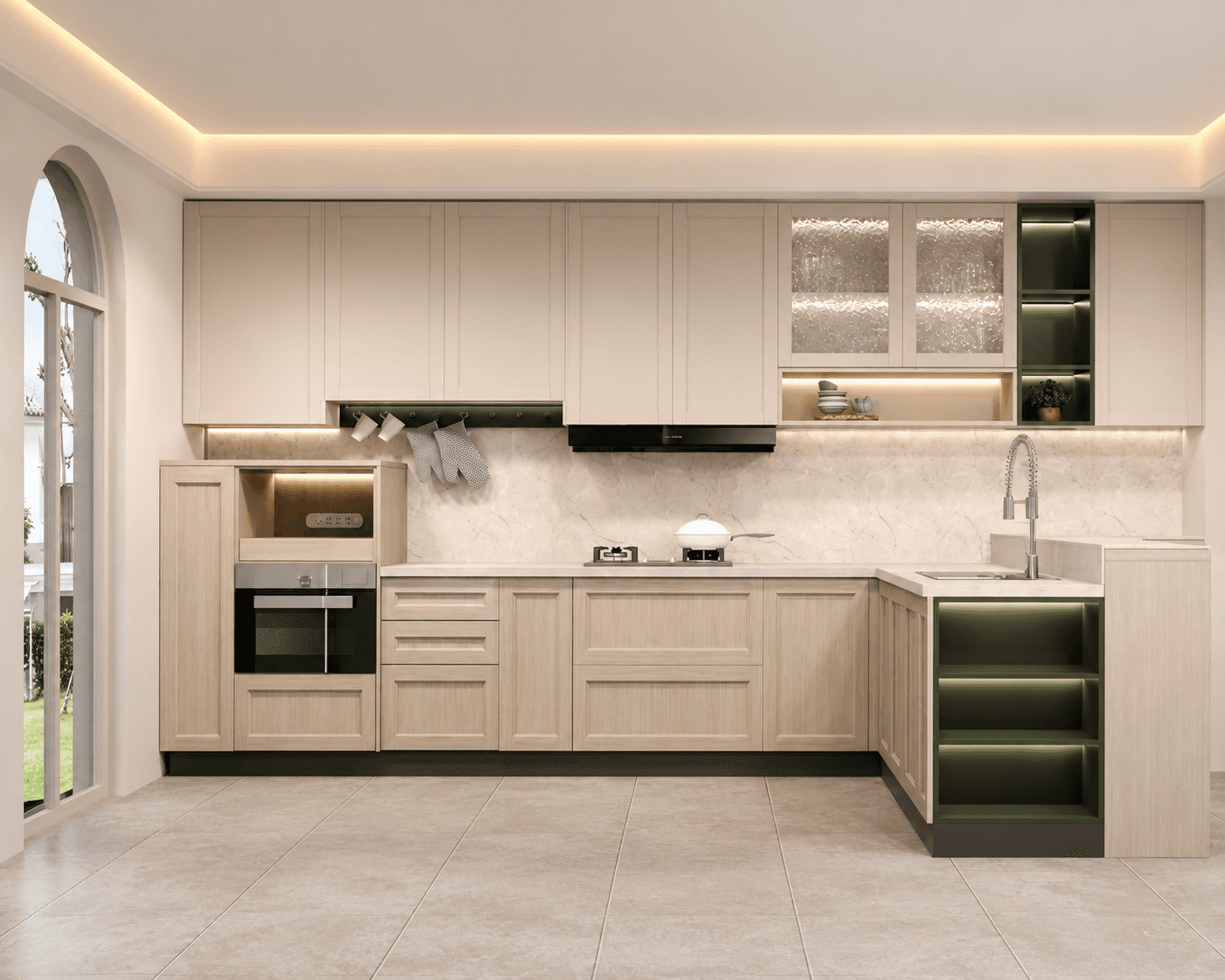
Craftsmanship
The Art of Teak: Why Heritage Timber Remains the Ultimate Kitchen Luxury
From grain to finish, teak brings warmth, strength, and lasting character to every kitchen we craft—rooted in Thai heritage and modern living.
Read Article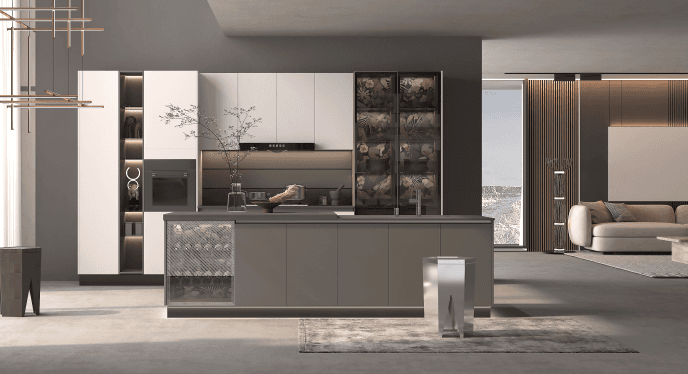
Layout & Space
Open Concept Living: Designing a Kitchen That Connects the Whole Home
An open kitchen can become the heart of family life. Here’s how thoughtful layout and proportion create flow without sacrificing function.
Read Article