Thailand Kitchens
Contemporary

Styles

Contemporary

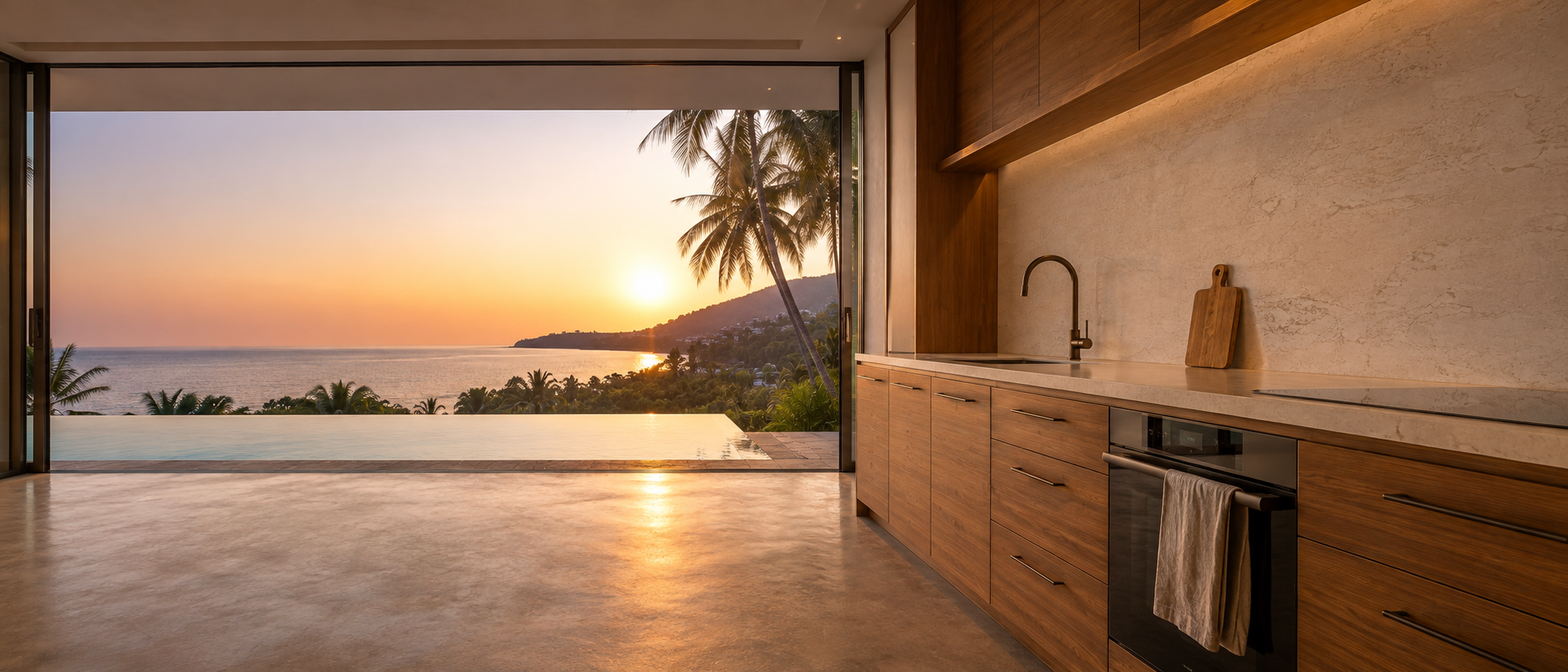
Contemporary kitchens combining timber and stone with clean lines and matt fronts.

Request a consultation

Spotlight

Where Contemporary Sits Between Modern and Traditional

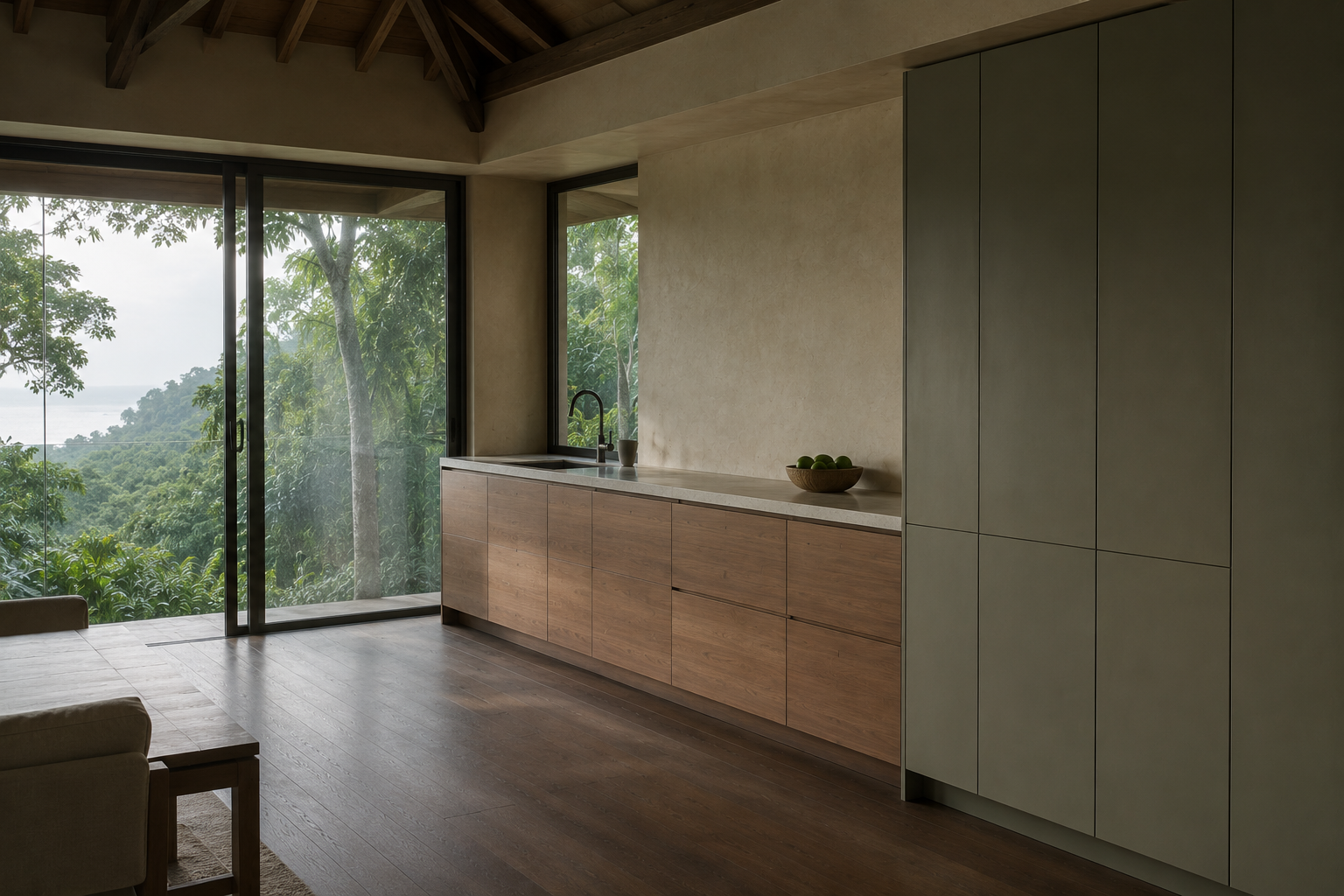
Contemporary sits between modern and traditional, and that is the point of it rather than a compromise. It keeps the clean lines and flat fronts of a modern kitchen but brings timber, stone and matt finishes back in, so the room reads as warm rather than engineered. It suits a house where the kitchen is visible from the sofa and has to look like part of the living space rather than a work area attached to it. Of the four styles it is the one that dates most slowly, because it does not depend on any single detail being fashionable.
Where Contemporary Sits Between Modern and Traditional
One material leads, the others support

The rule that keeps timber and stone from competing
Fronts and Finishes in a Contemporary Kitchen
Section 03

Fronts and Finishes in a Contemporary Kitchen

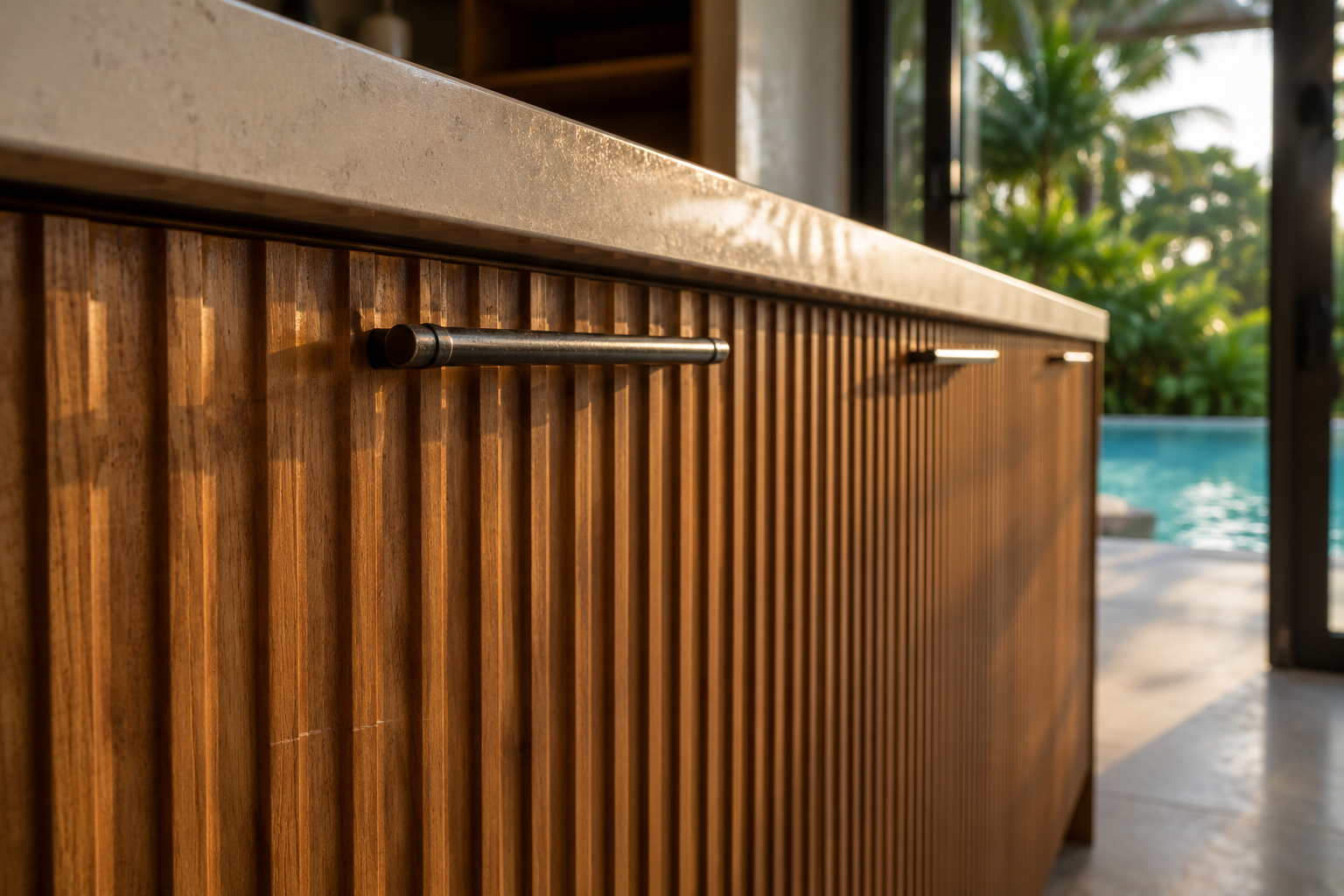
The fronts are where contemporary declares itself. Matt lacquer in a muted colour, a timber veneer with the grain running horizontally across a run, or a fluted front that catches light along its length are the usual choices, often two of them used together on different planes. What they share is that they stay quiet from across the room and only show their texture close up. A high gloss front pulls the kitchen towards modern and a framed door pulls it towards traditional, so the flat or lightly profiled front is what holds the style in the middle.
Stone Worktops and Splashbacks With Timber Cabinetry
Section 04

Stone Worktops and Splashbacks With Timber Cabinetry

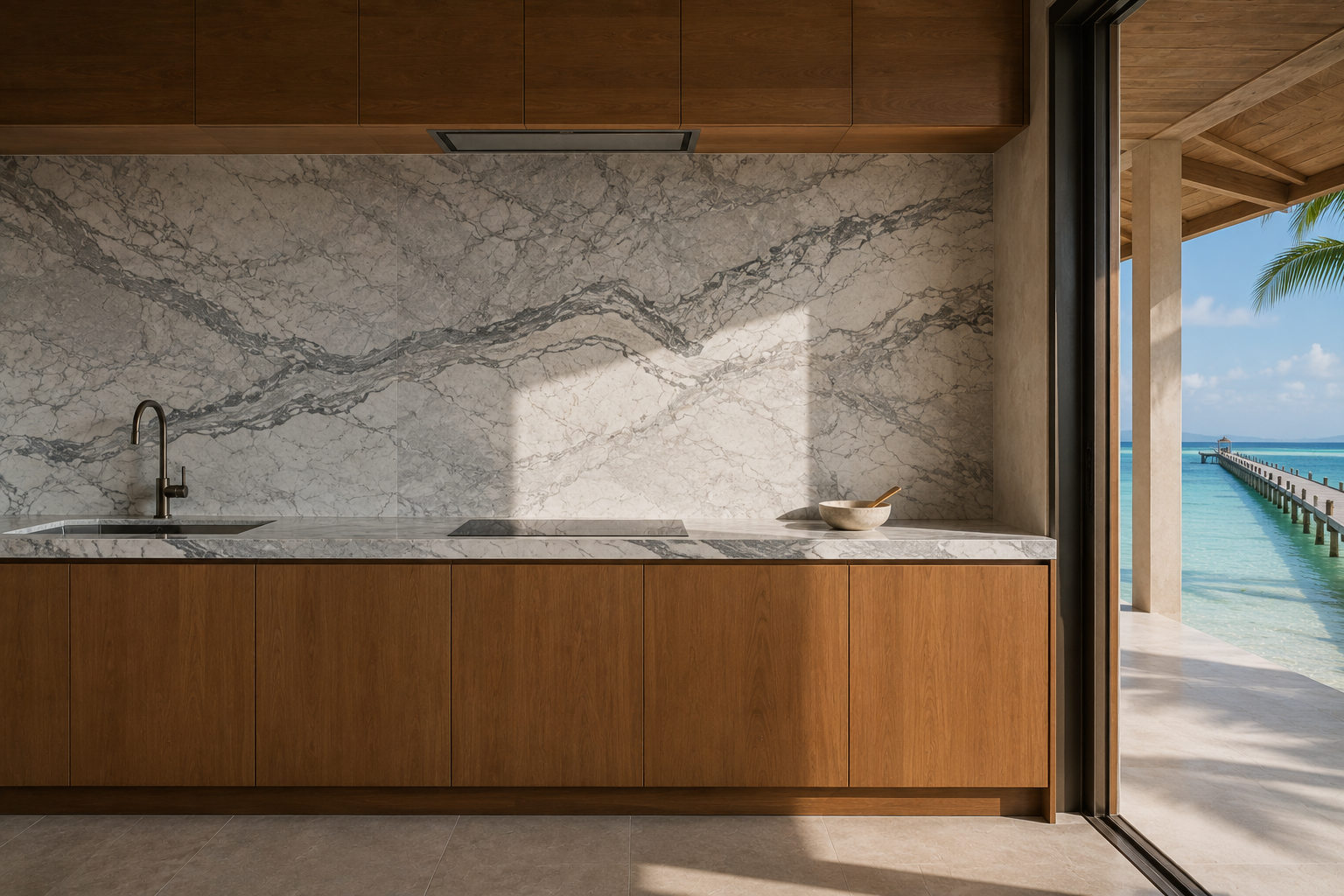
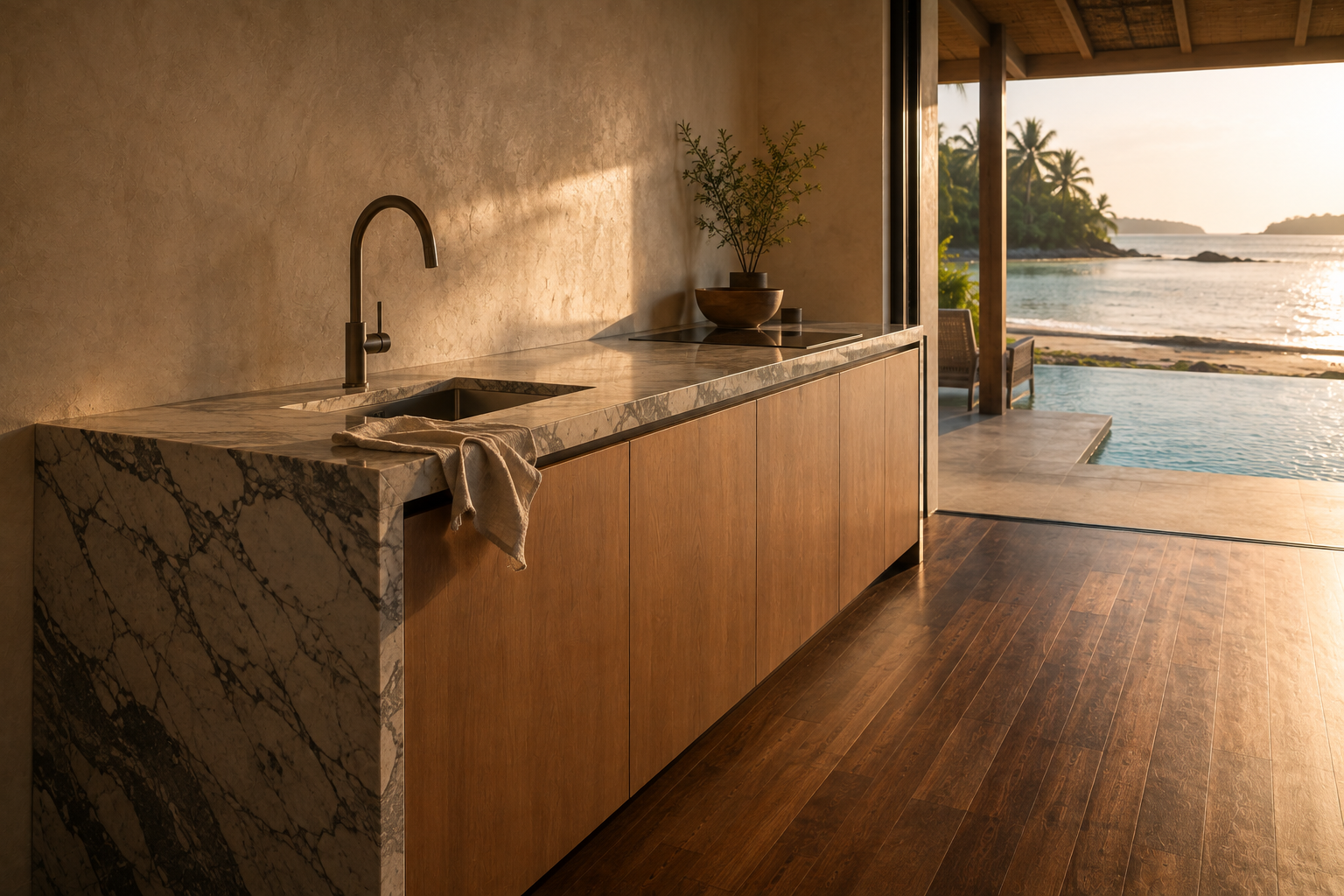
Stone does the structural work in a contemporary kitchen, visually as well as physically, because it is the surface that stops the timber from taking over. A pale stone against timber fronts keeps the room light, while a darker or more heavily veined one becomes the feature and lets the cabinetry stay plain. Running the same stone up the wall behind the hob instead of using tile removes a horizontal line from the elevation and reads as contemporary rather than traditional. The rule that holds throughout is one material leading and the others supporting.
Lighting Timber and Stone Without Killing the Colour
Section 05

Lighting Timber and Stone Without Killing the Colour

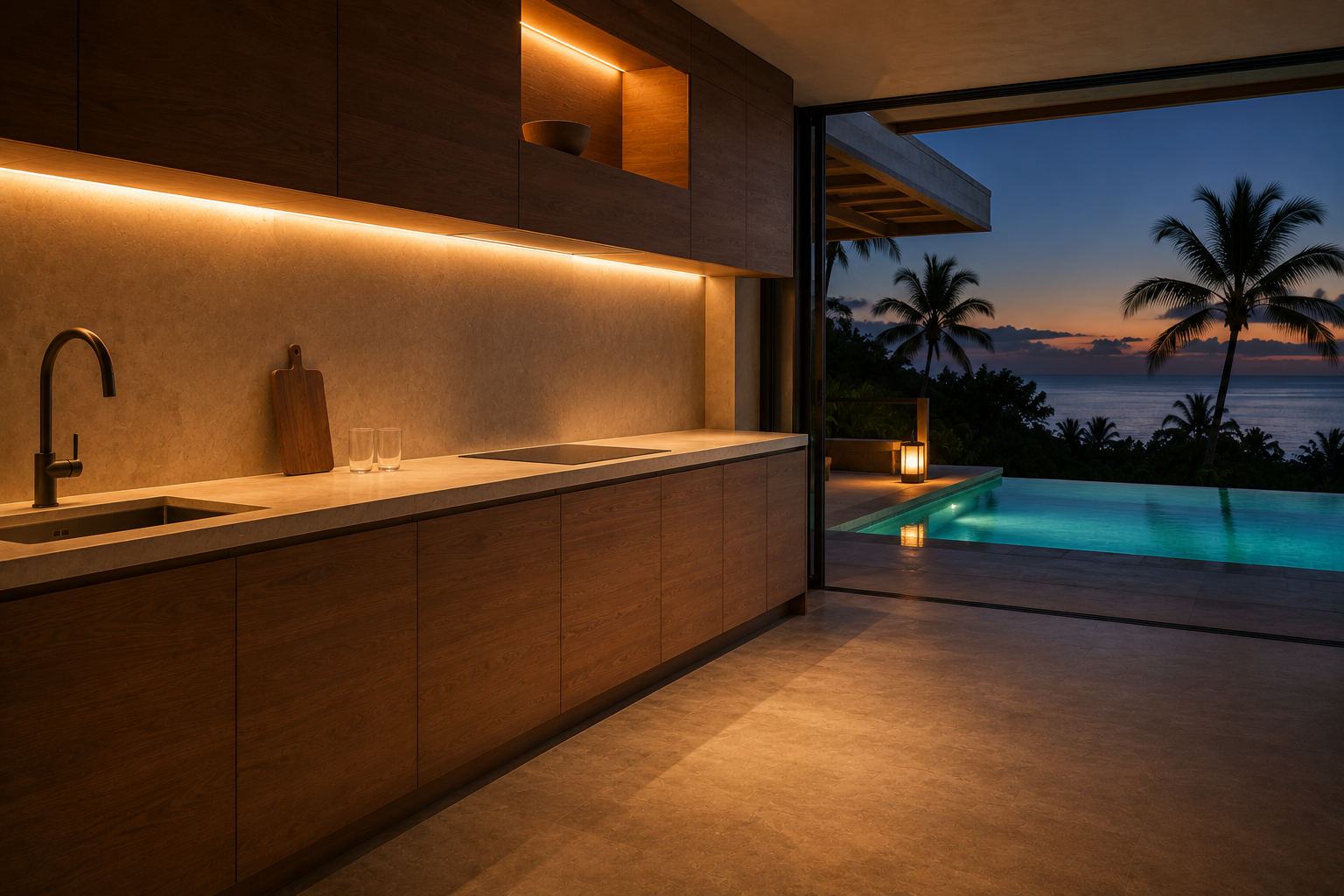
Warm timber under cool light looks grey, and pale stone under very warm light looks yellow, which is why the lighting specification and the material specification belong in the same conversation. Contemporary kitchens usually settle on a warmer colour temperature than a modern scheme would take, because the whole point is that the room feels inhabited. Under-cabinet lighting shows the texture on a fluted or veneered front, so it does more here than light the worktop. Daylight matters too, since the same timber reads differently on a wall facing the garden and one facing away.
Kitchen Cabinetry That Continues Into the Living Space
Section 06

Kitchen Cabinetry That Continues Into the Living Space

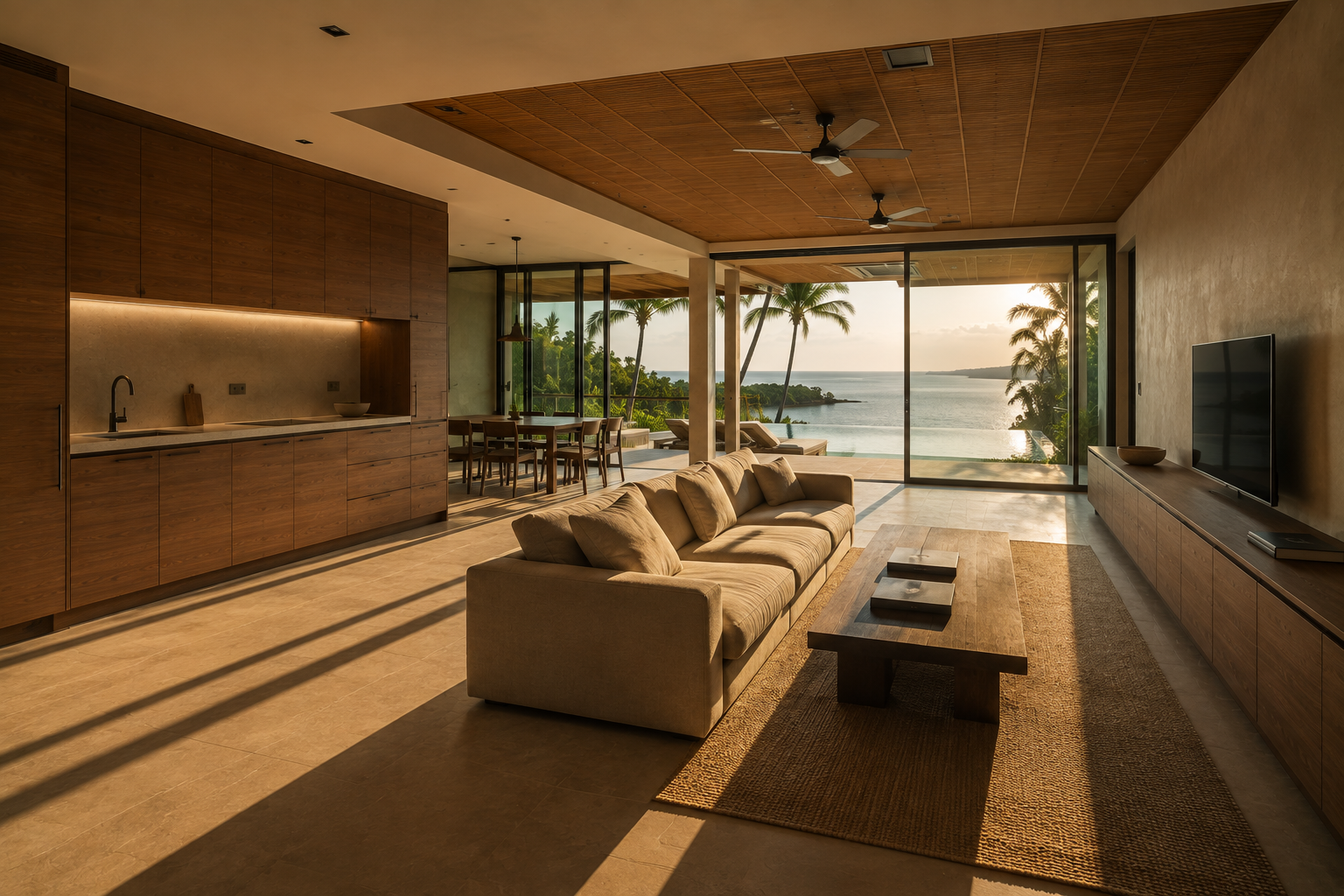
When the kitchen is visible from the living area it stops being a kitchen and becomes a piece of joinery in the room, which is the main reason contemporary works in open-plan houses. A tall bank finished in the same timber as a media unit or a wardrobe elsewhere ties the spaces together, and the transition from kitchen cabinetry to living-room storage can be made continuous rather than obvious. This is worth deciding early, because matching a finish later across two separate pieces of furniture is harder than building them to one specification at once.
Handles and Hardware in a Contemporary Kitchen
Section 07

Handles and Hardware in a Contemporary Kitchen

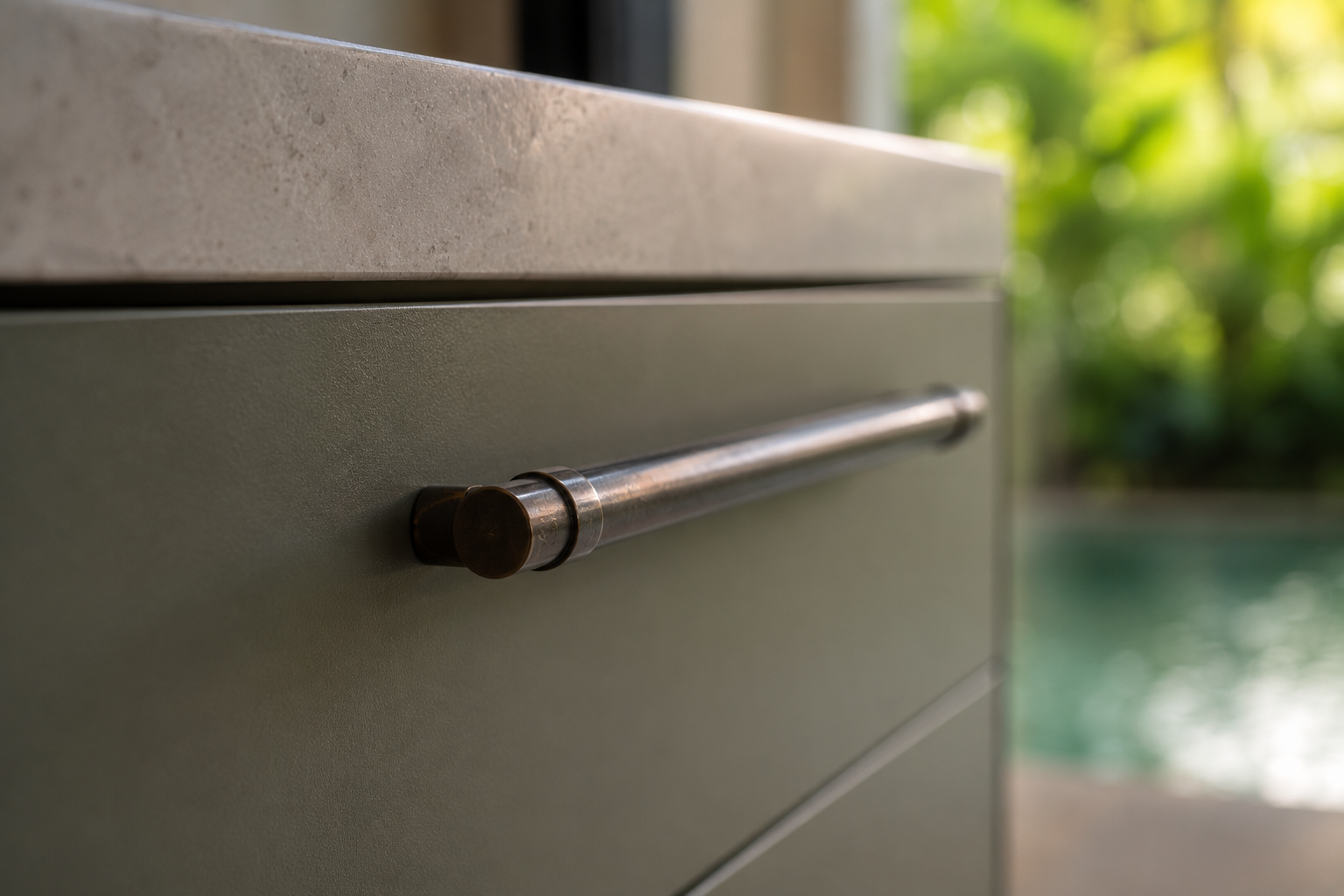
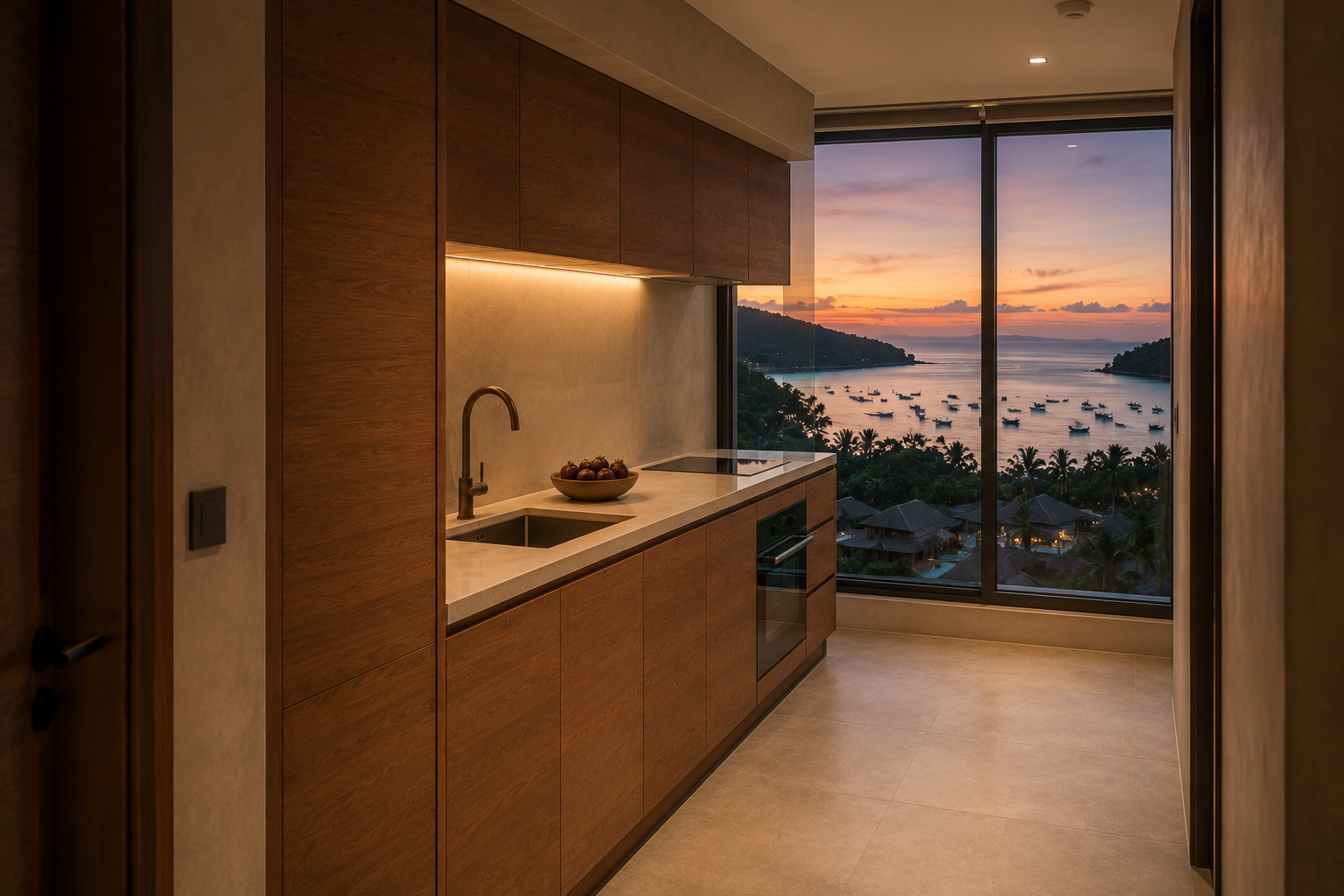
Contemporary is the style where the handle is a visible decision rather than an absence or an ornament. A slim bar in a dark metal, a thin edge pull, or an inset finger channel in a contrasting finish all sit comfortably here, where a large traditional knob would not and a completely handleless front would push the kitchen towards minimalist. The finish is usually chosen to answer something else in the room, the tap, the lighting or the window frames, rather than picked in isolation. Hinges and runners are specified for how long they stay quiet.
Contemporary Kitchens for Villas, Condos and Second Homes

Section 08

Contemporary Kitchens for Villas, Condos and Second Homes

In a villa contemporary is the safe answer where the kitchen is visible from most of the ground floor, because it neither disappears nor dominates. In a condominium the timber stops a small kitchen from reading as a wall of appliances, which is the risk with a fully modern scheme in a tight room. For a second home or a rental it holds up against changing taste, since nothing in it is tied to a particular year. Where the house already has a strong material identity, timber ceilings or exposed stone, contemporary meets it halfway instead of competing.

Highlights

What Makes a Contemporary Kitchen Work

01

Flat or lightly profiled fronts, quiet from across the room and textured close up

02

One material leading and the others supporting, so timber and stone do not compete

03

Lighting specified alongside the finishes, because colour temperature changes how timber reads

04

Cabinetry planned to continue into the living space rather than stop at the kitchen
What Makes a Contemporary Kitchen Work

Ready to plan a contemporary kitchen?

Send us the room dimensions and photographs of the finishes already in the space, the flooring, the joinery and the window frames. We will tell you which material should lead, what the fronts and worktop should be, and how the cabinetry can carry on into the rest of the open-plan room.

Request a consultation