Thailand Kitchens
Traditional Thai Kitchens

Styles

Traditional Thai Kitchens

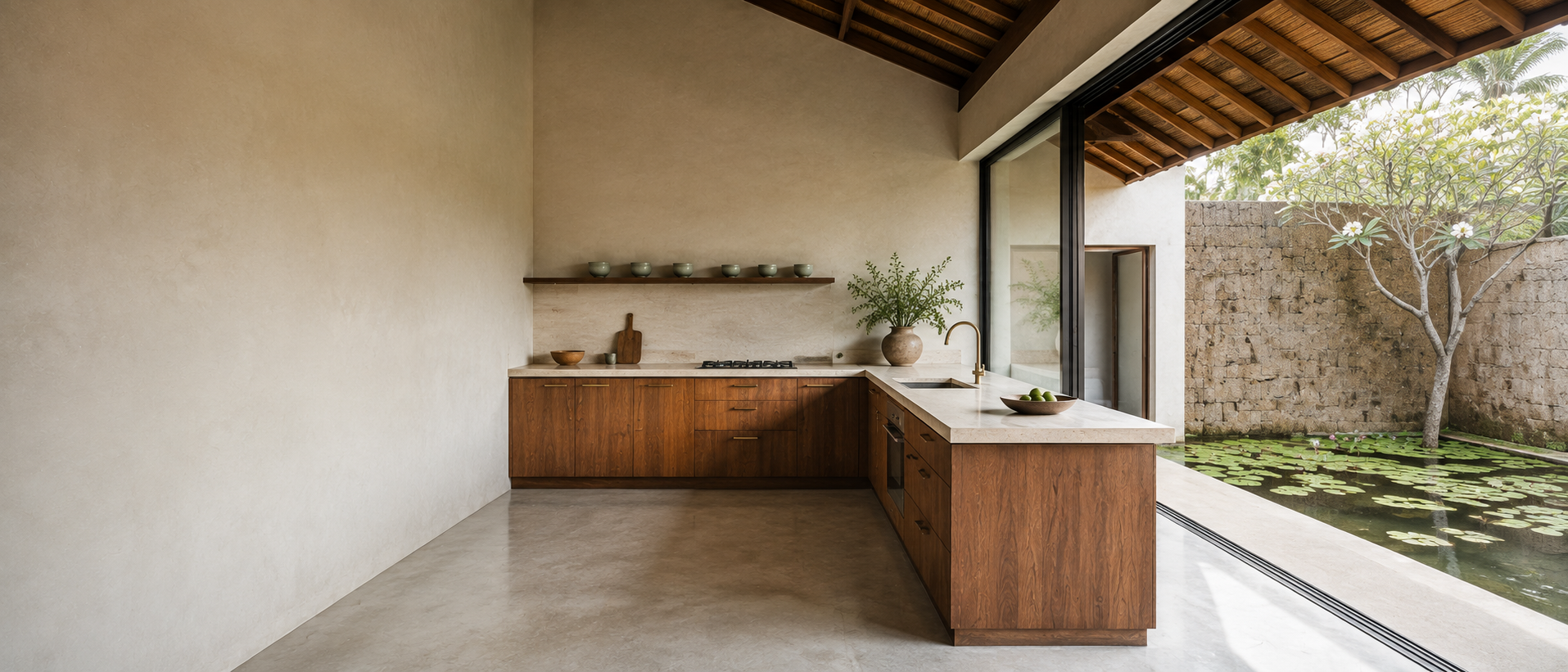
Traditional Thai kitchens in teak and tropical hardwood, with visible joinery and craft detailing.

Request a consultation

Spotlight

What Makes a Kitchen Traditional Thai

Traditional Thai is a material decision before it is a decorative one. It works with teak and other tropical hardwoods, visible joinery, and proportions that come from Thai building rather than from a European or American catalogue. The fronts are timber rather than a timber print, the grain runs where it can be seen, and the detailing stays simple enough to survive in a kitchen that is actually cooked in. It suits a house that already has timber in it, and anyone who would rather the kitchen belonged to where it stands than to an imported look.
What Makes a Kitchen Traditional Thai
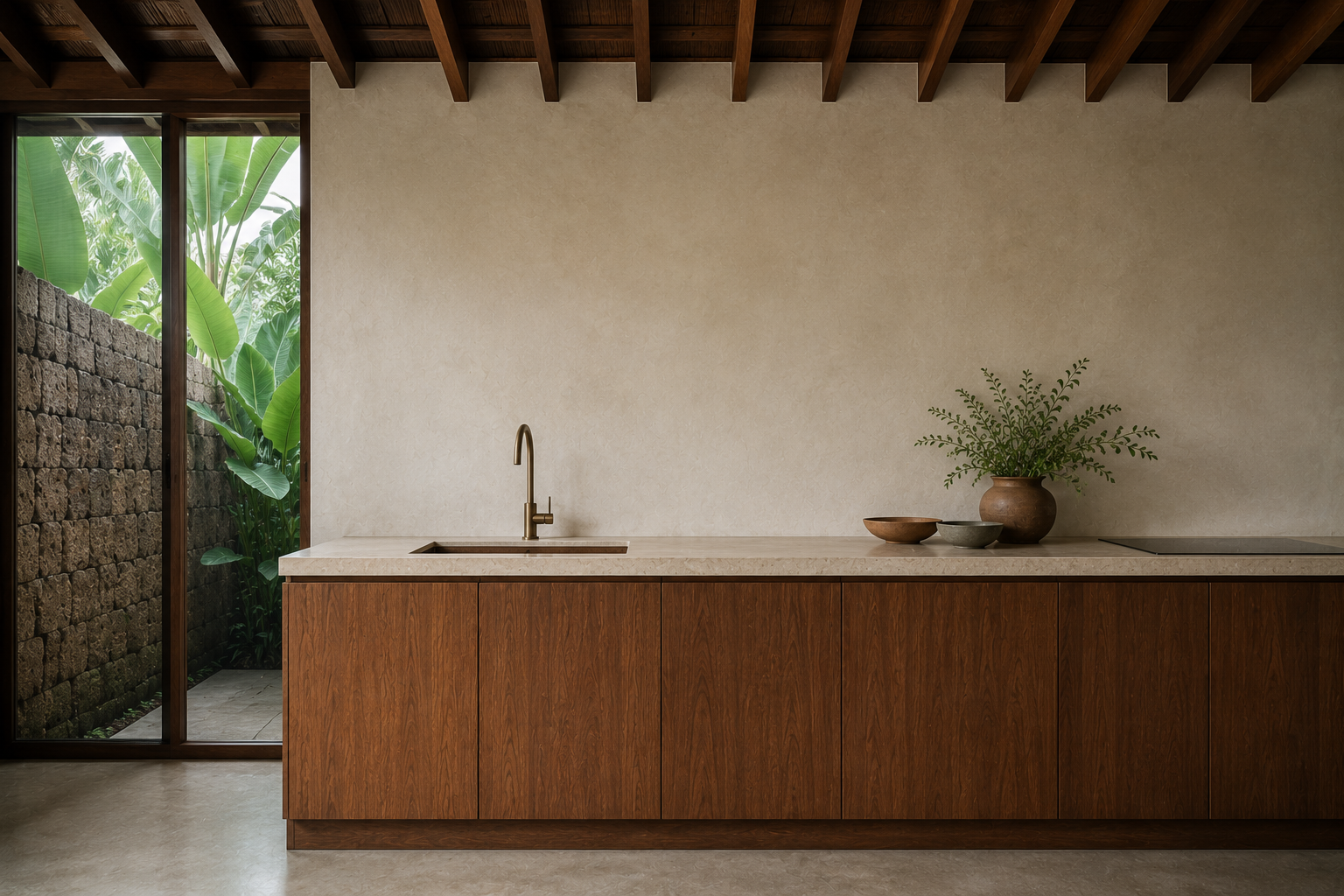
Teak gets better with age, not worse

Teak holds its shape in humidity better than most timbers, and the natural oils in the grain are the reason it has been used in Thai building for centuries. Left to age, the surface deepens in colour rather than degrading. That is worth knowing before you choose it, because a teak kitchen is not a finish that stays exactly as it looked on installation day.
Teak, Rubberwood and Other Timbers for a Thai Kitchen
Section 03

Teak, Rubberwood and Other Timbers for a Thai Kitchen

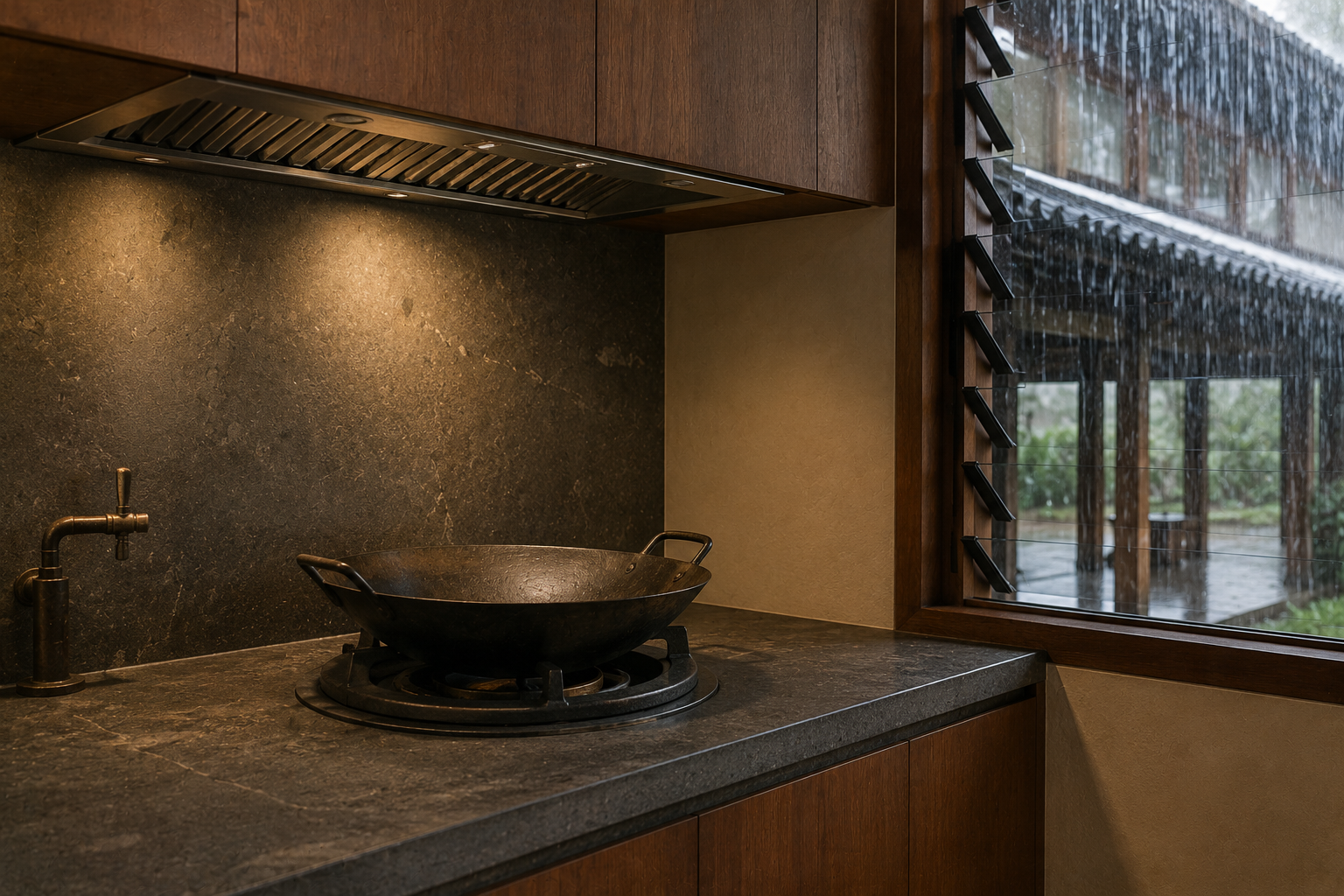
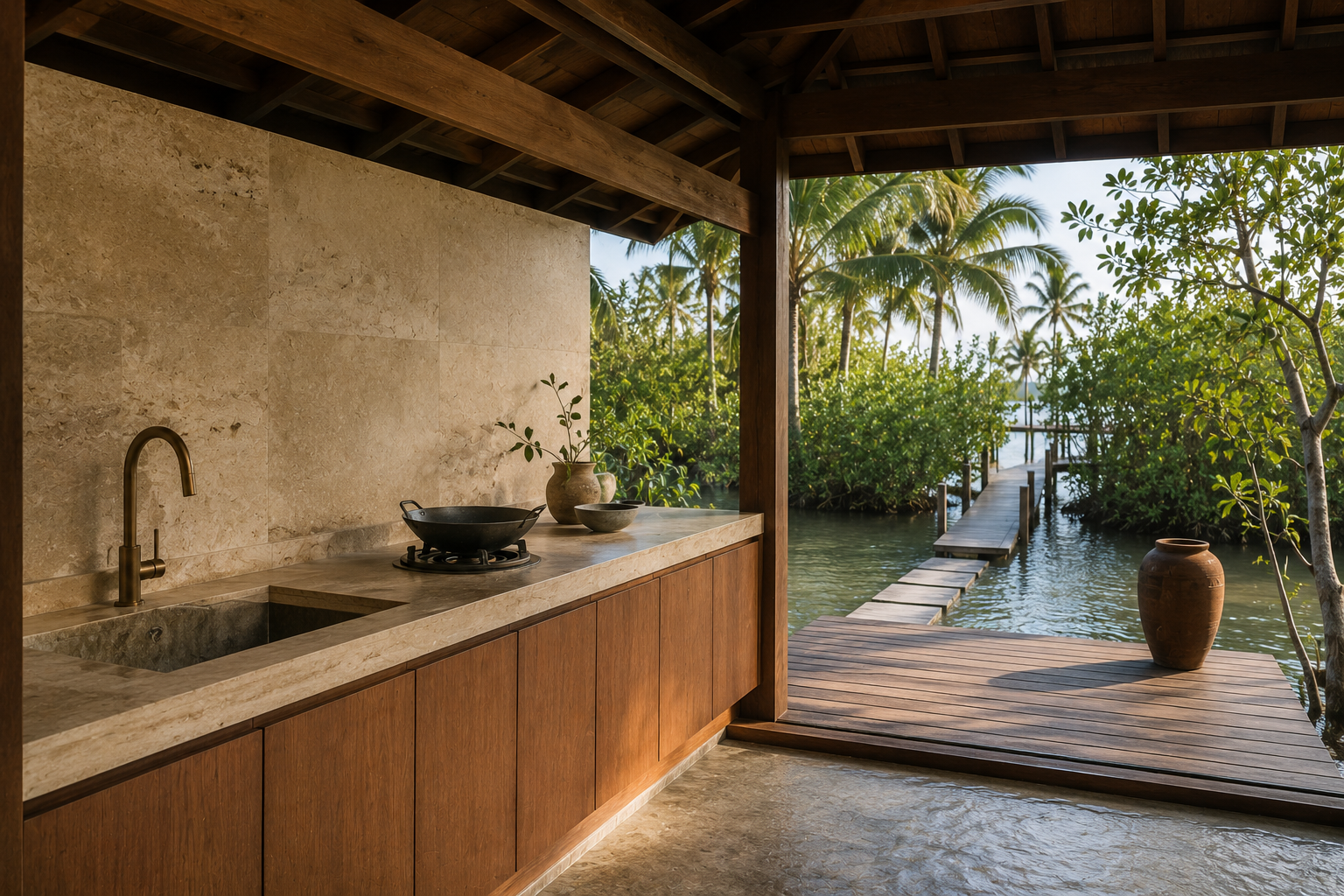
Not every timber behaves the same way in a kitchen. Teak is the reference point because it resists moisture and movement better than most, which is why it ends up in bathrooms and boats as well as houses. Rubberwood is worked widely here and takes a stain well at a different price point. Denser tropical hardwoods hold a crisp edge on a door profile. The choice affects what the fronts can do, how the grain reads across a run of cabinetry, and how the kitchen looks in five years rather than on handover day.
Door Profiles and Joinery in a Traditional Thai Kitchen
Section 04

Door Profiles and Joinery in a Traditional Thai Kitchen

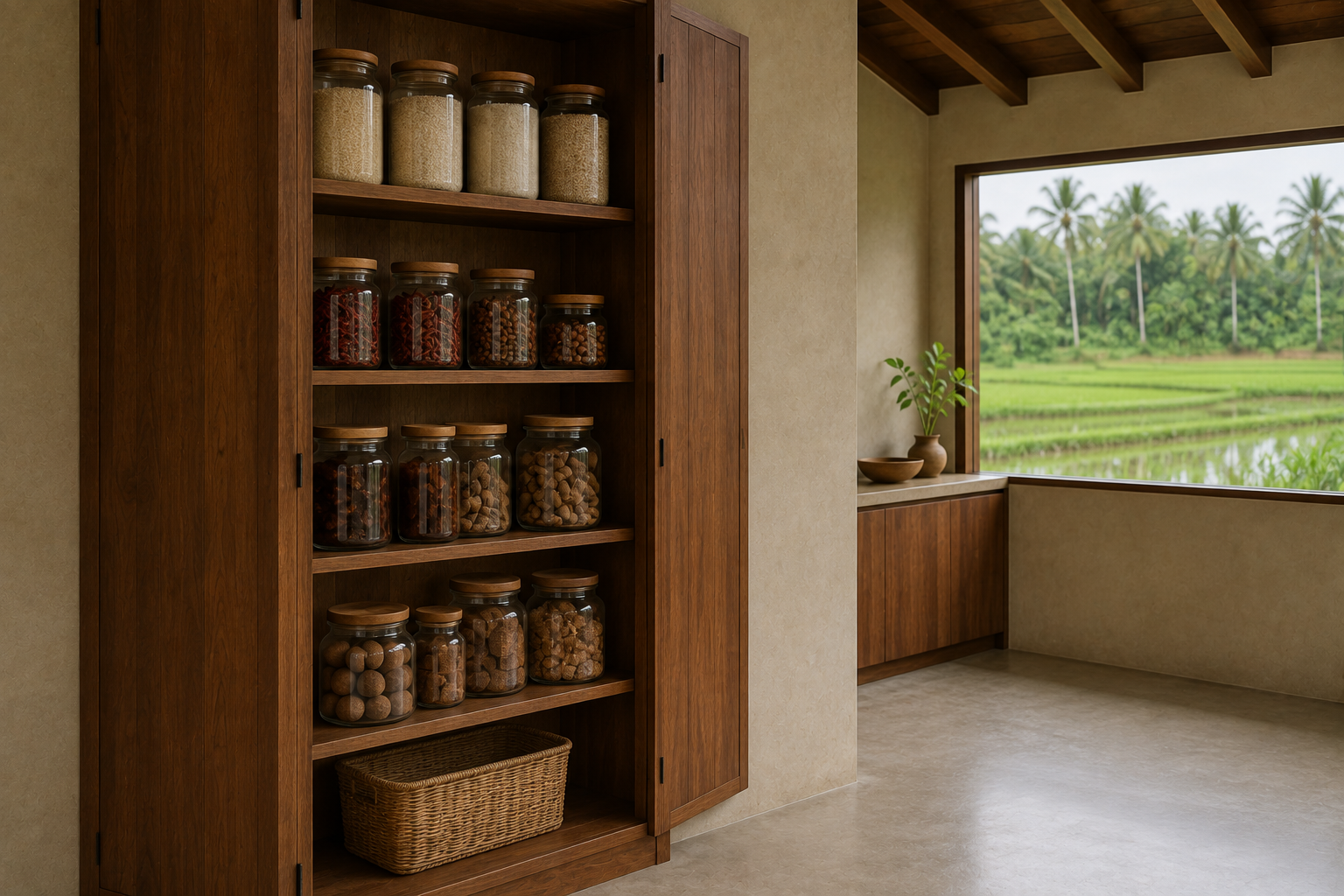
What separates a traditional kitchen from a modern one in timber is the front. A flat slab reads as contemporary whatever it is made from, while a framed door with a visible panel reads as traditional even in the same species. Between those two there is room to move: a shallow frame, a slim rail, a chamfered edge instead of a moulded one. Because the cabinetry is made to order, the profile can be drawn to sit with the doors and windows already in the house rather than pulled from a standard range.
Traditional Thai Kitchens That Take Modern Appliances
Section 05

Traditional Thai Kitchens That Take Modern Appliances

The practical question about a traditional kitchen is whether it can hold what a kitchen now has to hold. A dishwasher, an oven, a large fridge and an extractor all have to go somewhere, and none of them existed when the detailing being referenced was developed. Timber fronts can be made as appliance doors so the dishwasher and fridge disappear into the run. The oven and hob sit better housed in a tall unit or under a mantel-style hood than left exposed against panelling. Deciding which appliances stay visible is part of the design, not something settled afterwards.
Worktops and Splashbacks That Work With Timber
Section 06

Worktops and Splashbacks That Work With Timber

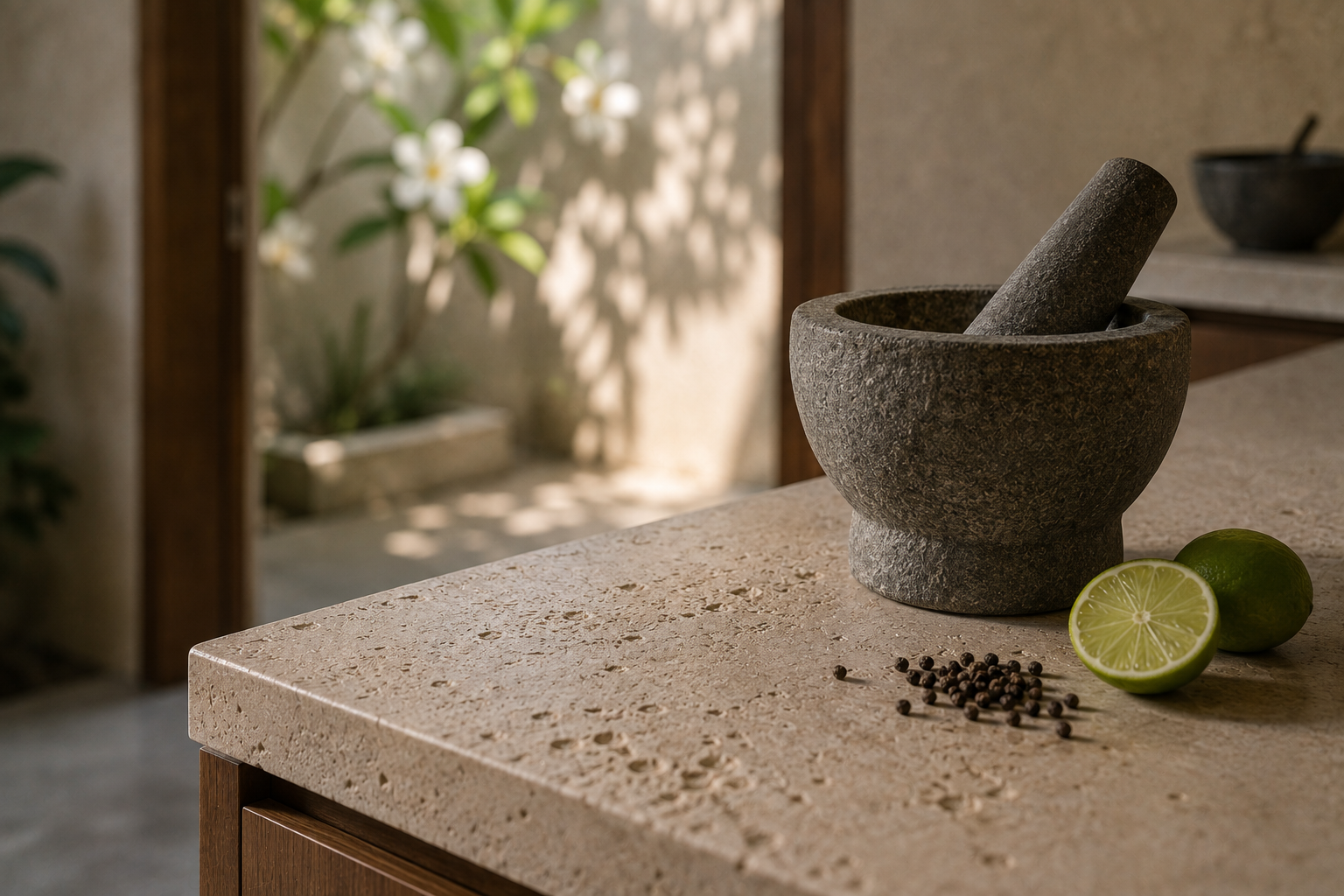
Timber cabinetry needs a worktop that can take water without being fussy about it, which is why stone does most of the work in these kitchens. A pale stone lifts a dark timber run and keeps the room from closing in, while a darker one lets the grain stay the loudest thing in the kitchen. Solid timber worktops are possible but ask for maintenance around the sink. On the wall behind the hob, glazed tile is the traditional answer and remains the practical one, since it cleans easily and sits comfortably next to wood.
Living With a Timber Kitchen in a Tropical Climate
Section 07

Living With a Timber Kitchen in a Tropical Climate

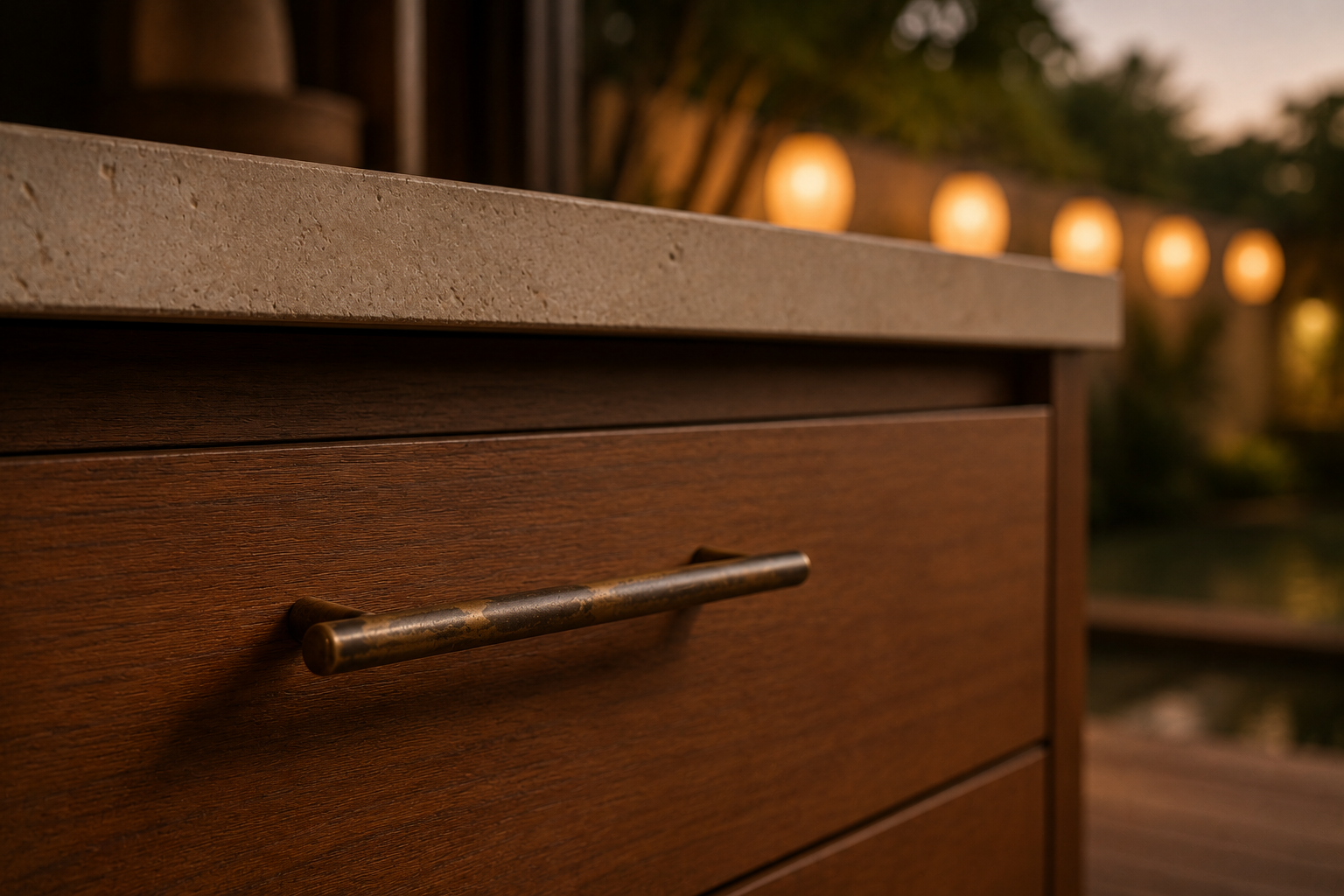
Timber moves with humidity, and a kitchen adds heat and steam to a climate that is already humid for most of the year. That is manageable, but it has to be designed for rather than discovered later. Seasoned timber, properly sealed edges and doors hung with enough tolerance to expand are what keep the fronts closing cleanly in year three. Extraction over the hob matters more here than in a dry climate, since steam that does not leave the room settles into everything, timber included. Kept sealed and wiped down, the surface improves rather than deteriorates.
Handles, Hinges and Metal Detail on Timber Fronts
Section 08

Handles, Hinges and Metal Detail on Timber Fronts

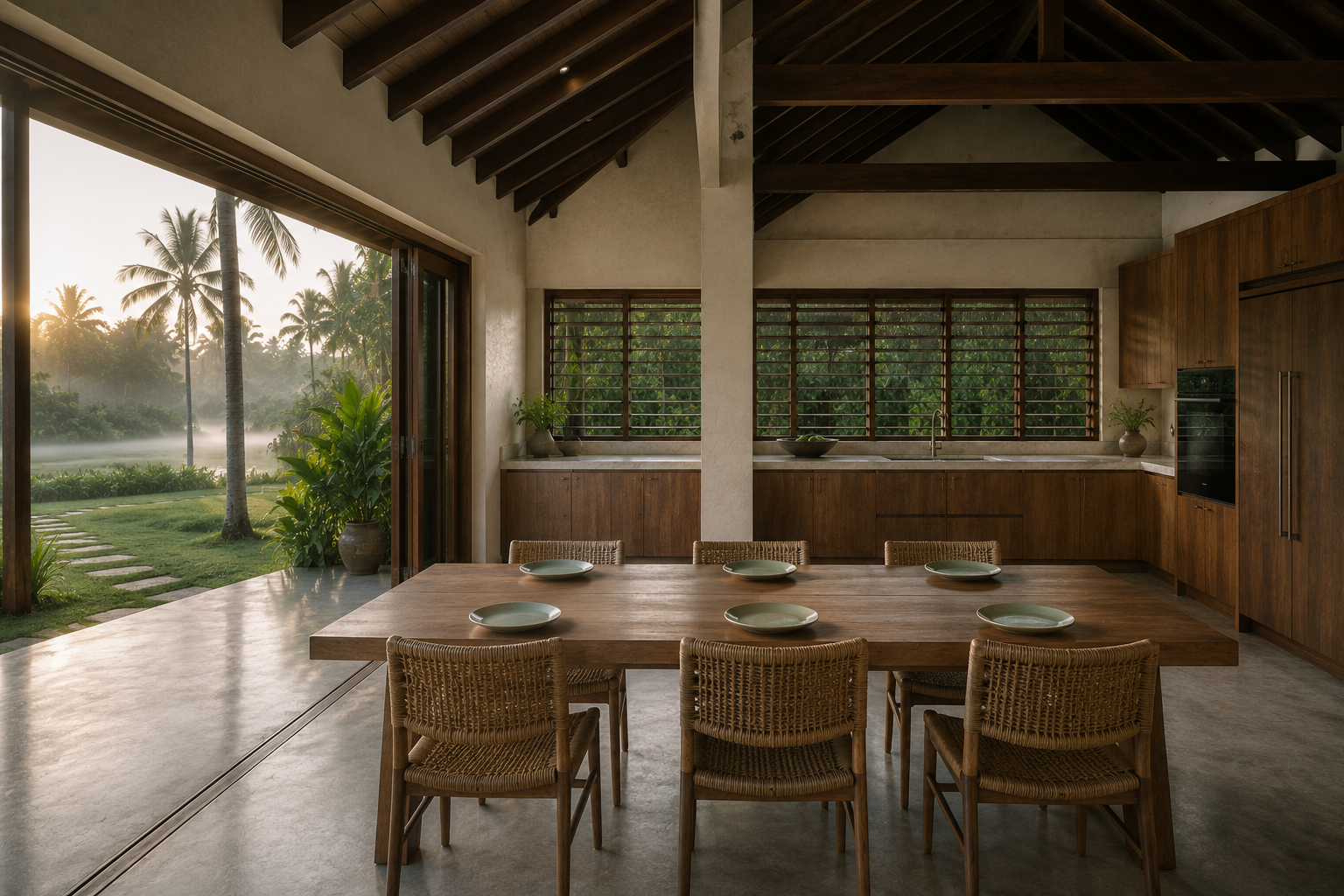
On a timber front the handle is the one piece of the kitchen that gets touched every day, so it carries more weight than its size suggests. Brass warms as it ages and picks up a patina that suits timber, while a darker bronze or blackened finish holds its colour and reads quieter. Cup handles and knobs sit naturally on a framed door, where a long bar pull would pull the whole kitchen towards contemporary. Hinges and runners are the part nobody looks at and everybody notices when they fail, so they are worth specifying properly whatever the front looks like.
Where a Traditional Thai Kitchen Fits Best
Section 09

Where a Traditional Thai Kitchen Fits Best

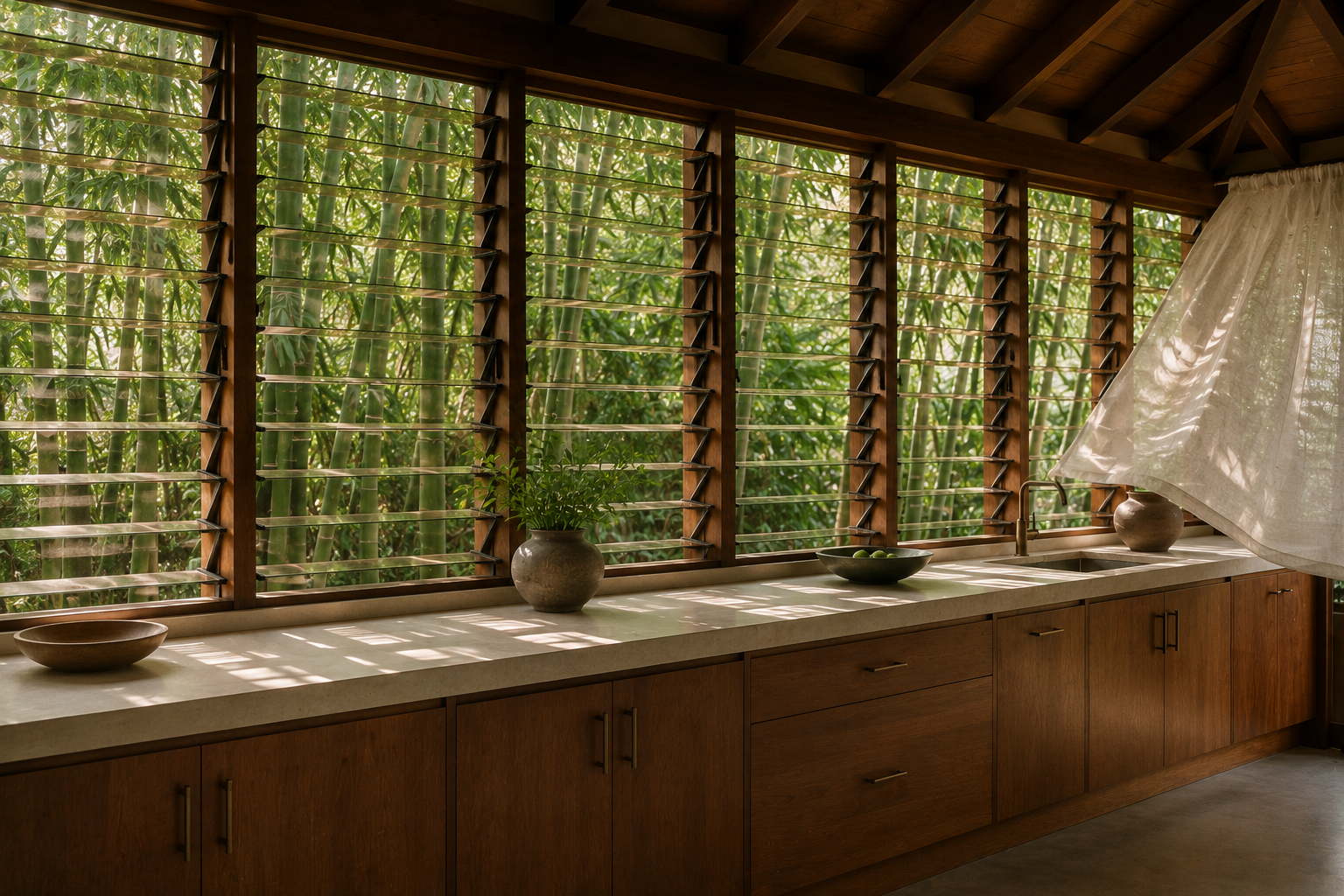
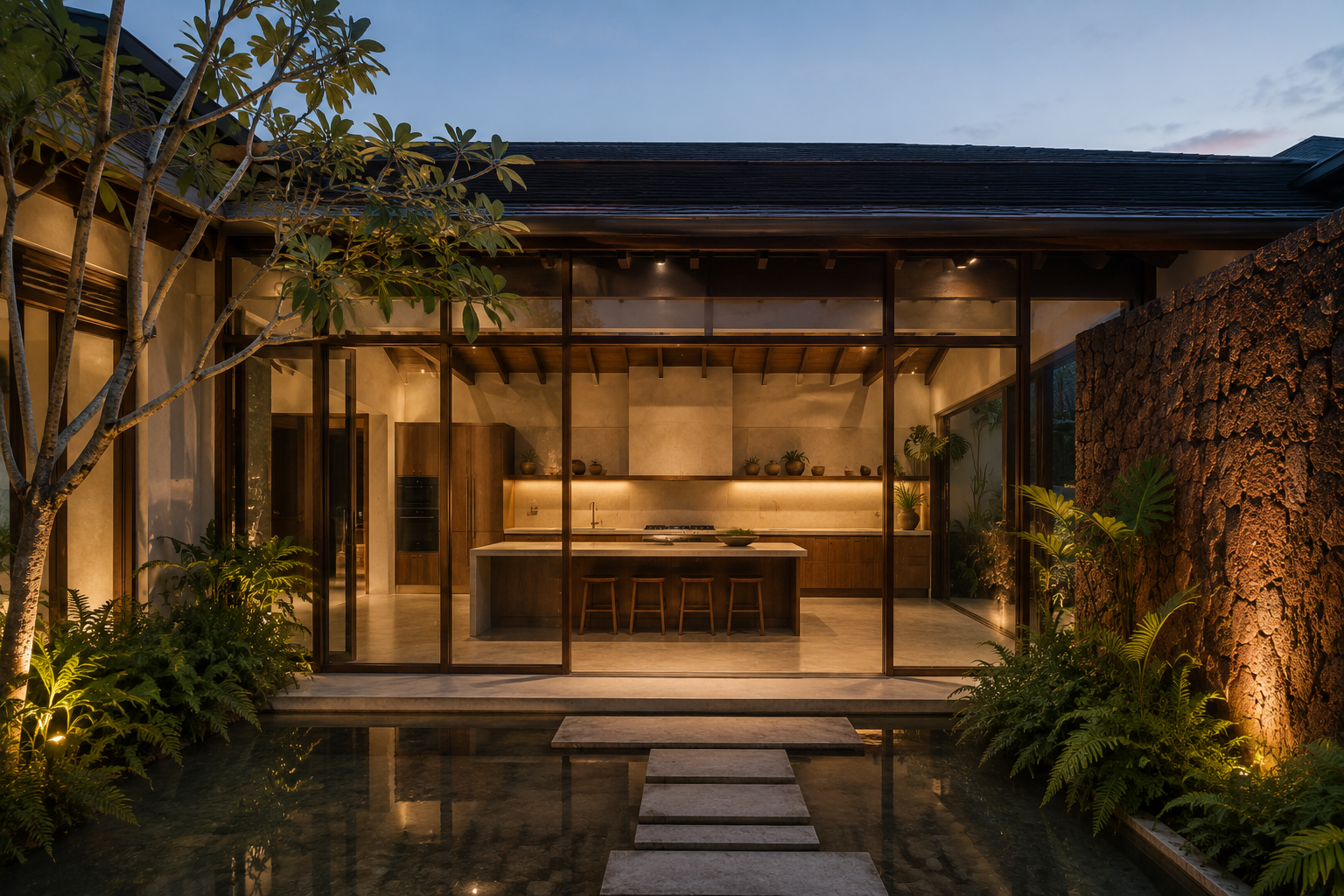
This style has a strong opinion, so it belongs in a house that already agrees with it. Timber ceilings, exposed beams, teak flooring or shuttered windows all give the kitchen something to answer to. In a house built the other way, all glass and pale plaster, a full traditional kitchen can look like it was carried in from somewhere else, and a warmer contemporary scheme usually lands better. The exception is a room that opens onto planting or a garden, where timber holds its own against whatever is growing outside.
Traditional Thai Kitchens for Villas, Second Homes and Rentals

Section 10

Traditional Thai Kitchens for Villas, Second Homes and Rentals

In a villa the style has room to be itself, especially where timber already appears in the ceilings or the joinery elsewhere in the house. For a second home it answers a question owners ask often, which is how to make a place feel like it belongs here rather than like the house they left behind. Rental and boutique properties use it as the thing guests photograph, since a timber kitchen reads as specific to this country in a way that a white handleless run does not. In a small condominium the style is harder to carry, because heavy fronts in a tight room close it down.

Highlights

What You Get in a Traditional Thai Kitchen

01

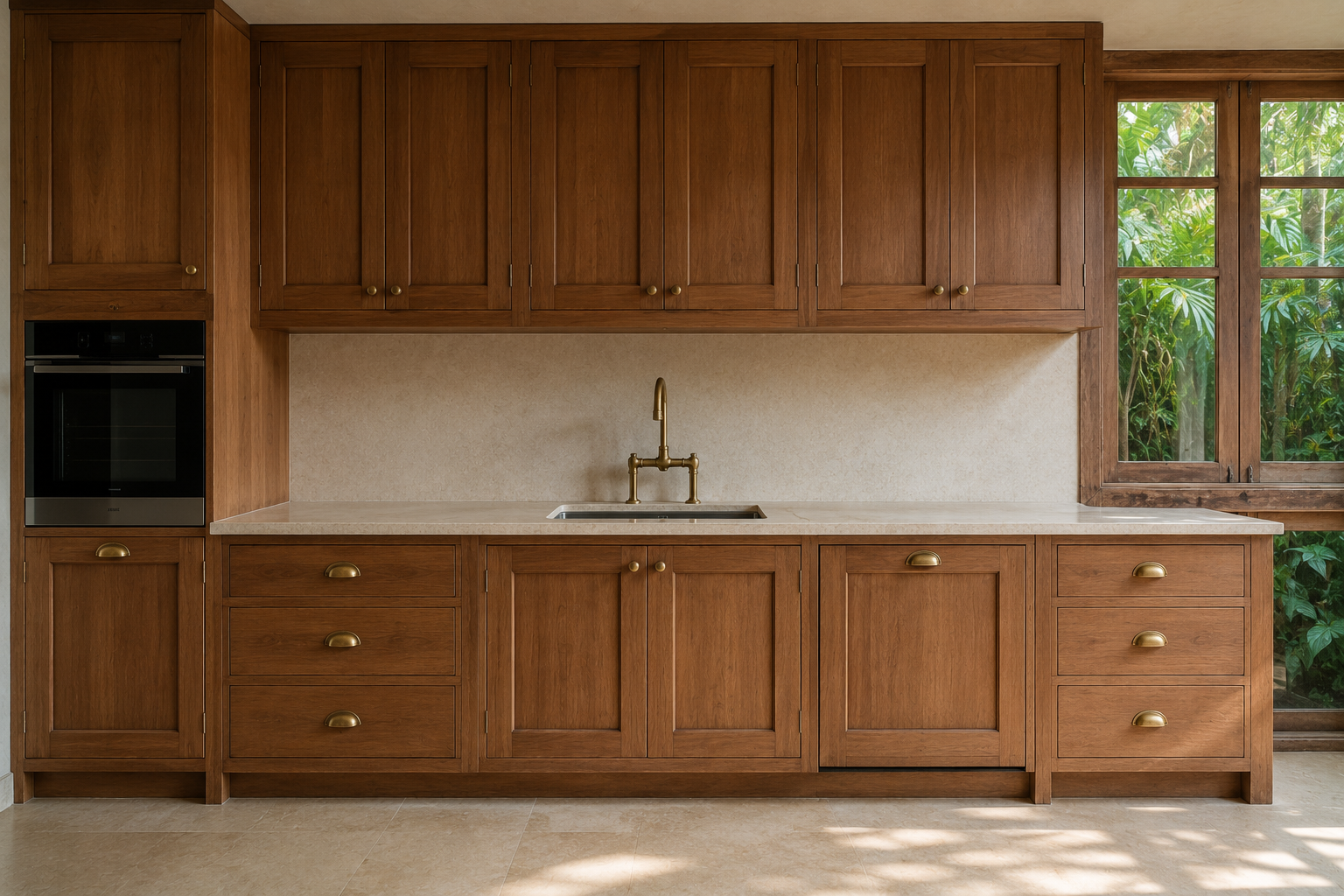
Timber fronts in teak or another tropical hardwood, chosen for how the species behaves in this climate

02

Door profiles and joinery drawn to match the doors and windows already in the house

03

Modern appliances housed behind timber fronts rather than left to fight the detailing

04

Sealed edges, seasoned timber and extraction planned for humidity, so the fronts still close cleanly in year three
What You Get in a Traditional Thai Kitchen

Thinking about a timber kitchen?

Send us photographs of the room and of the timber already in the house, the doors, the ceilings, the flooring. We will tell you which species to build in, what profile the fronts should take to sit with what is there, and how the appliances can be housed without breaking the detailing.

Request a consultation